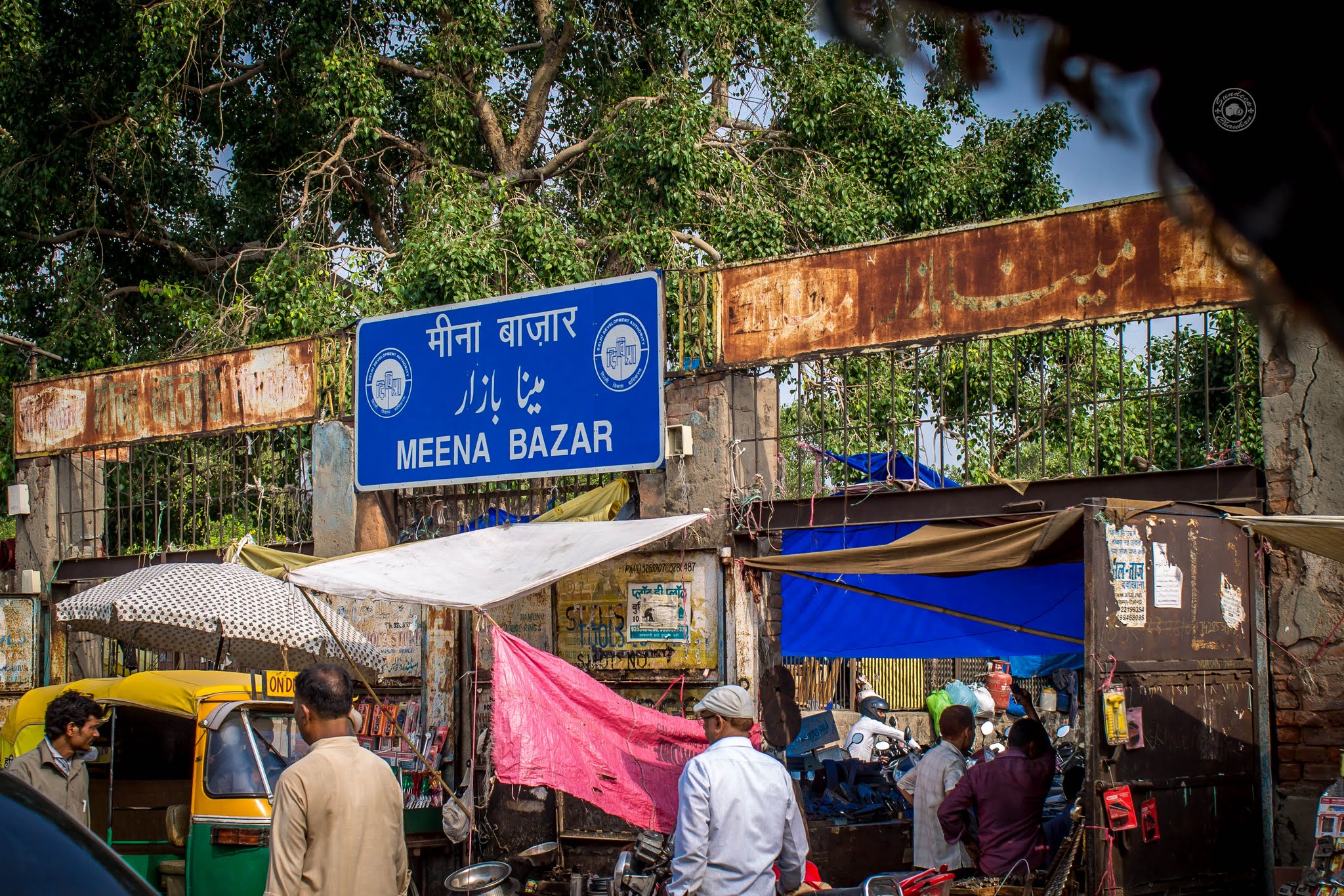
Rising majestically in the heart of Old Delhi, the historic complexes of the Red Fort and the Jama Masjid (Masjid-i Jehan-Numa) stand as the ultimate dual-monuments of Emperor Shah Jahan. Built in the mid-17th century, these two sites are physically and historically linked—connected by a direct thoroughfare that allowed royal processions to march from the fort gates to the Friday congregation. This photo essay, shot on June 18, 2016, documents a chronological heritage walk starting at the citadel in the morning and ending at the mosque's elevated courtyard in the late afternoon.
Morning: The Citadel of Lal Qila
The journey began at 11:05 AM at the iconic Lahori Gate of the Red Fort. This massive red sandstone gateway, topped by octagonal domes and chatris, serves as the main entrance to the fortress, framing the Indian national flag flying high above the ramparts.
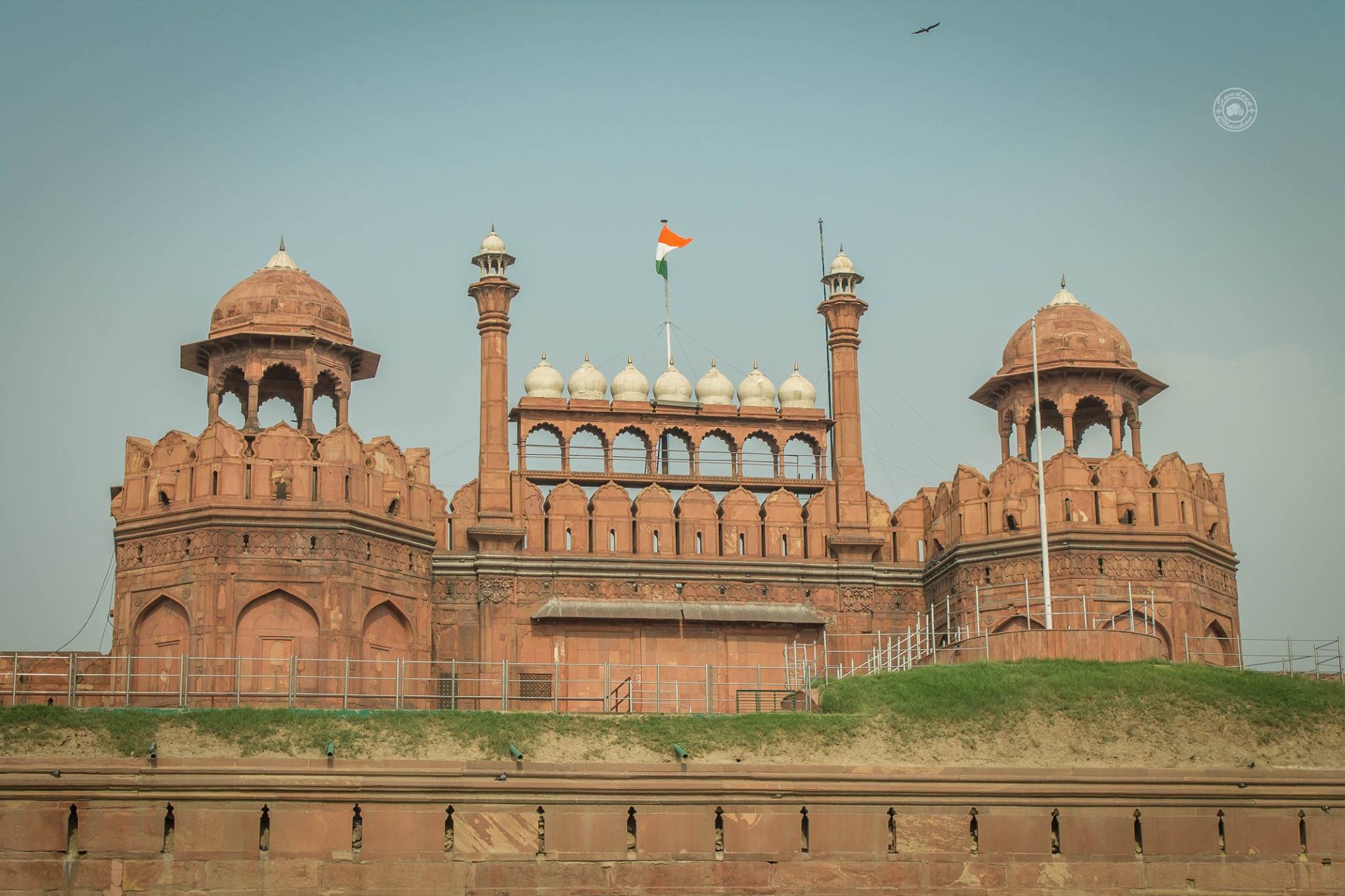
Stepping through the Lahori Gate at 11:26 AM leads into the Chhatta Chowk covered bazaar, a vaulted corridor lined with traditional handicraft shops. Symmetrical stone arches frame local souvenir and jewelry vendors, creating a cool, shaded pathway leading deeper into the fortress complex.
.jpg)
Late Afternoon: The Sanctuary of Jama Masjid
As the afternoon heat mellowed, the walk shifted to the elevated platform of Jama Masjid (located at coordinates 28.6507° N, 77.2334° E). Stepping through the northern gate reveals the sheer scale of the central courtyard. Spanning over 90 meters in width, this vast sandstone plaza is designed to accommodate up to 25,000 worshippers during congregational prayers.
At 3:55 PM, using a Canon EOS 1100D DSLR with an EF-S 18-55mm f/3.5-5.6 IS II lens, the first shot inside the mosque captured the reflection of the towering southern minaret in the central howz (ablution pool) used for wudu before prayers.
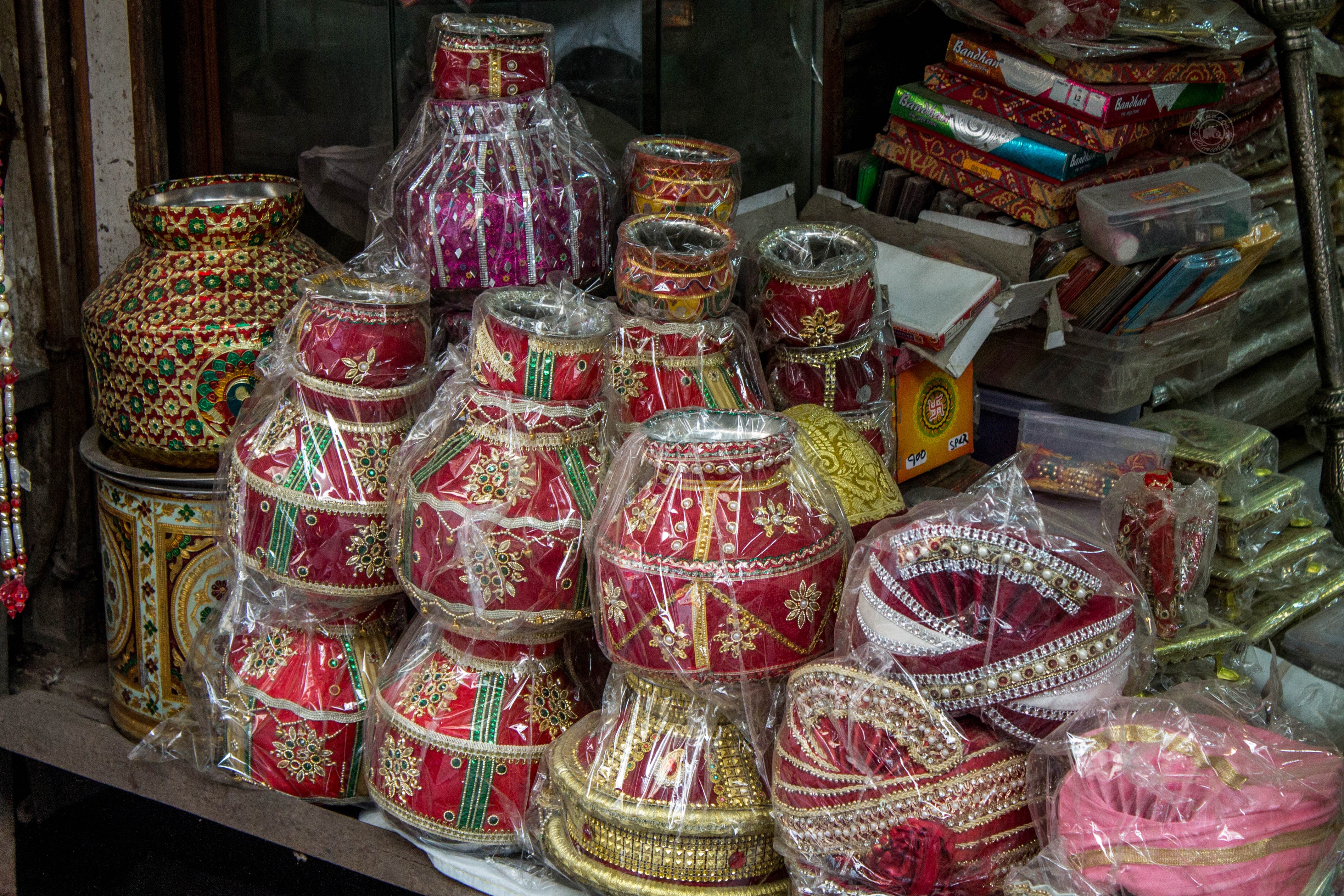
The Photographer's Lens: Framing the Cloisters
For a photographer, the design of the mosque offers endless frames. Symmetrical red sandstone cloisters (arcades) line three sides of the courtyard, providing a cool shelter. Walking through these long corridors, the repetitive arches create a rhythmic frame-within-a-frame effect. Using the standard 18-55mm lens, wide-angle shots at 18mm capture the vastness of the cloisters, while zooming to 34mm or 55mm frames the details of the domes peaking through the sandstone archways.
Managing the extreme dynamic range of the mid-summer sun on June 18 was a core challenge. The bright light illuminated the white marble domes to the brink of overexposure, while the deep sandstone archways held heavy shadows. High-contrast settings, like shooting at 18mm (1/250s, f/10.0, ISO 100) at 4:08 PM for the northern gate cloisters, allowed us to capture the details of the stone vaults and the delicate texture of the marble under the afternoon sky.
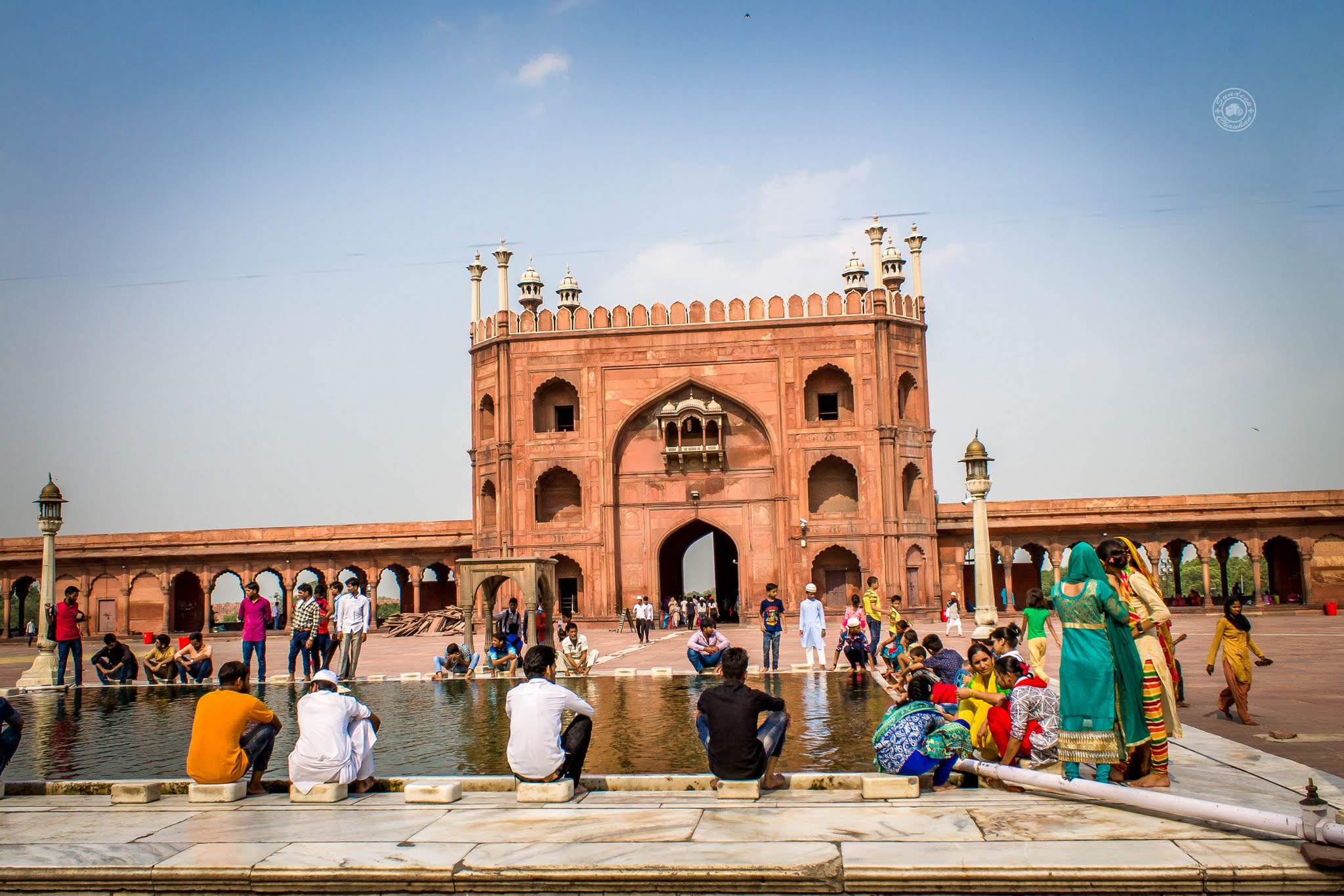
Finally, at 4:21 PM, we captured the three iconic white-and-black striped marble domes and towering minarets framed through one of the side sandstone arches (captured in IMG_5979.jpg at 34mm), ending the walk as the sun dipped low over Shahjahanabad. Capturing the timelessness of this Mughal treasure is a reminder of how sandstone and marble can hold the spiritual soul of a city for centuries.
- Location: Located in Old Delhi, opposite the Red Fort. Nearest Metro Station is Jama Masjid (Violet Line).
- Best Time: Sunrise/early morning for soft golden light and peace, and late afternoon (golden hour) for glowing red sandstone.
- Focal Choice: 18mm wide-angle for vast courtyard symmetry and corridor perspectives, and 50-55mm for domes and minaret close-ups.